
Guides
How to grow hotel room service revenue without hiring anyone
Hotel room service revenue leaks after 9pm, when the kitchen is down to one person and the guest has Deliveroo open on the sofa. Moving the order from the bedside phone to a QR code, with the menu in the guest's own language and card payment built in, wins that spend back without adding a single shift.
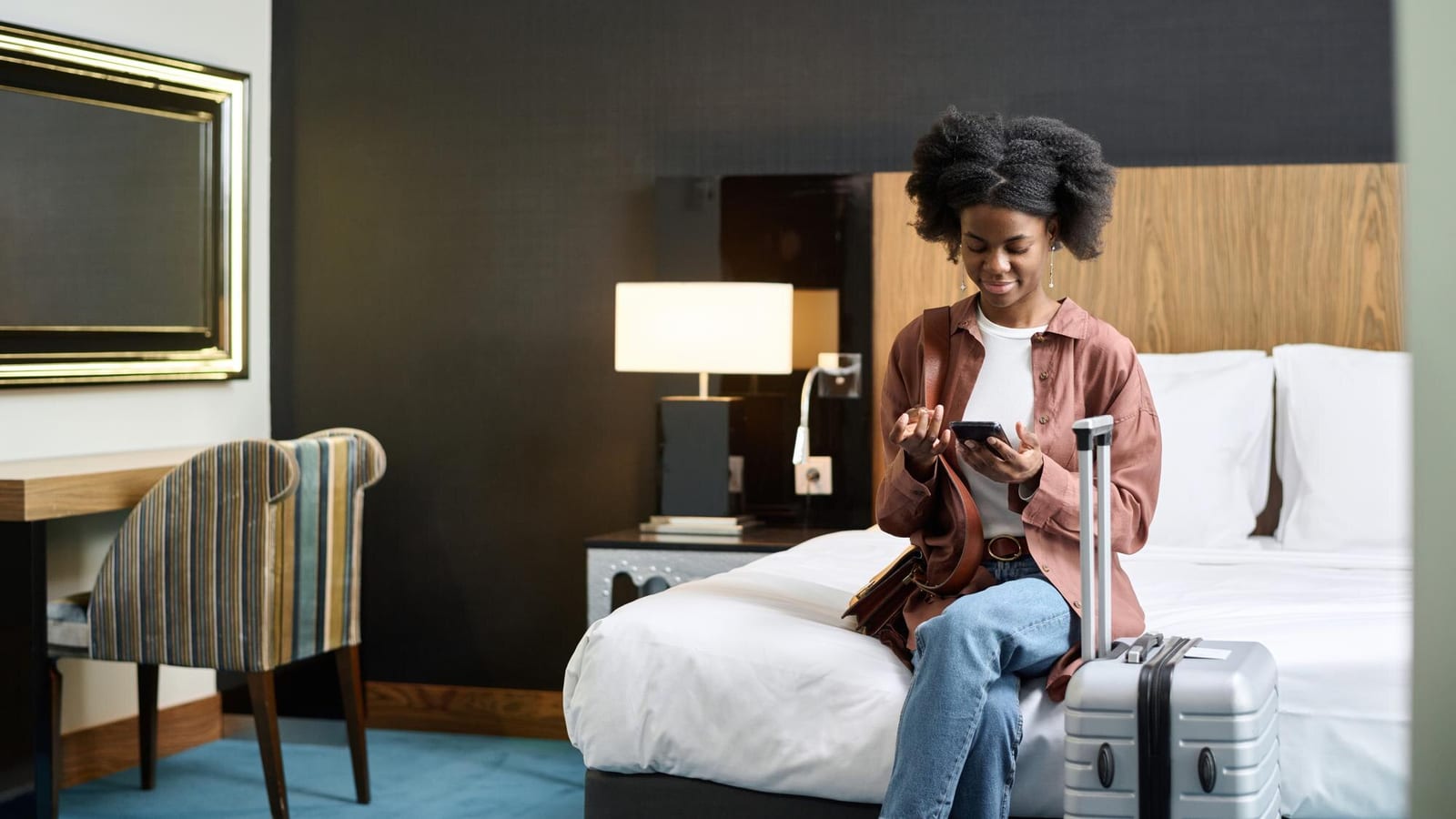
Hotel room service revenue is decided between 9pm and 11pm, and that is exactly when most UK hotels run the kitchen with one person and the front desk with another. You do not need a third. You need an order that never touches the phone: the guest scans a code in the room, picks from a menu in their own language, pays by card or Apple Pay, and the kitchen gets a ticket. This article walks through the setup and the four numbers that tell you after a month whether it worked.
In short
-
Mobile orders in hotels grew 42% year on year, in-room dining is the most used outlet in hotel apps, and the UK is one of the top three markets, according to the IRIS mobile ordering report published in December 2025 and based on 4 million orders across roughly 2,000 hotels.
-
39% of travellers want to order room service from their phone or a chatbot, and 73% are more likely to book a hotel with self-service technology, in Oracle Hospitality's 2022 survey of 5,266 consumers in nine countries including the UK.
-
Delivery platforms charge restaurants 15% to as much as 40% per order; every dinner a guest orders from them is margin and guest contact your hotel has handed away.
-
UKHospitality counted 170,000 hospitality jobs lost between October 2024 and November 2025 on ONS data, so "hire someone for the evening shift" is not the plan most operators can afford.
-
Measure four things: orders after 9pm, average order value, minutes from order to delivery, share of rejected orders.
Why do guests order from Deliveroo instead of the hotel?
Because a delivery app takes three taps and the hotel takes a phone call. A guest who has been travelling all day does not want to ring reception, ask when the kitchen closes and spell out a room number. The app on their phone already knows where they are and what they like. The hotel offers a laminated menu from three years ago and a note saying the kitchen shuts at 9pm.
Language is the second reason. A London or Edinburgh hotel in season serves guests from Germany, Spain, the Gulf and China. A menu in English only, read out over a crackly bedside phone, does not sell a cheese board to someone whose English stops at "hello".
Payment is the third. If the guest is not sure whether the order goes on the room bill or needs cash at the door, they choose the option where the card is already saved. In the Oracle survey, 49% of travellers said they expect contactless payment in the hotel.
How much does one quiet evening cost?
Run the numbers on your own property, because the difference between "it feels like a lot" and an actual figure usually decides the budget. Take a 100-room hotel at 70% occupancy, 70 rooms in use. If one room in ten orders a £25 meal from a delivery app instead of the hotel, that is seven orders a night, £175 of sales, £63,875 a year going past the front desk in a courier bag. At the 29.1% F&B department margin CBRE reported for full-service hotels in the first half of 2025, that is about £18,600 of profit.
Add the things that never show in the P&L: a moped rider in the lobby at 10.30pm, a guest collecting a pizza box in slippers at reception, the smell in the corridor. None of it improves the Google rating.
The upside is measurable too. eHotelier's August 2026 analysis cites hotels that reported a 15% to 30% higher average cheque after moving to digital ordering, and a 30% rise in average order value at Amora Hotel Jamison in Sydney. The mechanism is unremarkable: when the guest sees photos and add-ons, they add the dessert and the drink nobody would have suggested on the phone.
What has to change so an order never needs a phone call?
The order has to be created on the guest's phone and land in the kitchen with nobody at reception in between. Four pieces, each a one-day job.
A QR code in the room. A small stand on the desk or a sticker by the TV with one line: "Order dinner to your room". The code opens the menu in the browser, no app download, no account; the room number is embedded in the code, so the guest never types it. In the hotelspot guest app every room gets its own code, and the menu, including descriptions, is translated automatically into 34 languages.
A menu with opening hours. Set hours per outlet, not per hotel. Kitchen until 10pm, bar with cold plates and drinks until 1am. At 11.30pm the guest does not see a steak they cannot have; they see a charcuterie board the night porter can plate in three minutes. In G-commerce Manager each outlet has its own hours and its own card.
Payment on the phone. Card, Apple Pay and Google Pay through Stripe, with "charge to room" available for corporate guests. The money settles to the hotel's account, and the guest sees the payment status, and any refund, in the same place they ordered.
A ticket in the kitchen and a status for the guest. The order appears in the panel and as a notification for whoever is on shift, who moves it to "in progress" and "delivered" with one tap. The guest sees each step, so the "where is my food" call never happens. If the kitchen has to reject an order, it picks a reason from a list and the guest reads it in their own language. Those status updates are where most of the saved time sits: every "is it on its way" call is two minutes of conversation and one interrupted task.
How do you build a late menu one person can serve?
Short, and prepped before 8pm. The late card has 8 to 12 items: three mains that reheat or assemble in five minutes (a curry, a pasta, a soup), two salads, a cheese or charcuterie board, two desserts, drinks. Anything that needs a pan and 20 minutes of a chef stays on the daytime menu.
Before the kitchen closes, the team preps components for 10 to 15 portions and labels them with the time. The night porter does not cook; they plate. Late menu prices can sit 10% to 15% above the restaurant, because the guest is paying for convenience rather than ingredients, and digital orders already carry more add-ons than phone orders. Check your own numbers after a month before you treat that as a rule.
Photograph every dish in the same light on the same plate with a phone. A menu without photos sells worse than one with them, and a guest ordering at 10pm looks rather than reads.
Phone or QR code: what does the comparison look like?
| Criterion | Order by bedside phone | Order by QR code |
|---|---|---|
| Reception time per order | 3 to 5 minutes on the call, then relaying to the kitchen | None, the ticket goes straight to the kitchen |
| Errors (wrong room, missing side) | Common, depends on noise and language | Rare, the guest picks the items |
| Languages | Whatever the person on shift speaks | 34, automatically |
| Payment | Cash or room bill | Card, Apple Pay, Google Pay or room bill |
| Hours | When someone answers | Per outlet, round the clock for the bar |
| Dessert and drink upsell | Depends on the staff member | Shown with every order |
| Cost | Staff time on every order | Subscription from 249 PLN a month (about £50) plus Stripe fees |
IRIS's data set of 4 million orders shows mobile ordering cuts guest waiting time by an average of 10 minutes. In a hotel that is the difference between a dinner that comes back as a photo on Instagram and one that comes back as a line in a review.
How do you know after 30 days whether it worked?
Write down four numbers from the week before launch and compare them a month later. Without a baseline you will not know whether the lift came from the QR code or from a busy conference week.
Orders after 9pm. The headline metric, because that is where the leak was. If a 100-room hotel moves from one or two late orders a night to six or eight, the process works.
Average order value. Compare phone orders with digital ones. If digital is not higher, check whether add-ons and desserts are visible at the basket stage.
Minutes from order to "delivered". The late-menu target is under 25 minutes. If it creeps up, the card is too long or the prep is running out.
Share of rejected orders and the reasons. A recurring "ingredient unavailable" means the card is too big; "kitchen closed" means the outlet hours are wrong.
And one number from outside the panel: how many courier bags crossed the lobby this week. If it fell, the guest is ordering from you.
Frequently asked questions
Does the guest need to install an app to order room service?
No. The QR code opens the menu in the phone's browser, with nothing to download and no account to create. The room number is in the code, so the guest goes straight to the menu and basket.
What happens when the kitchen is closed and a guest orders at midnight?
The guest only sees outlets that are open at that hour, for example the bar with cold plates. The kitchen menu disappears automatically at closing time, so there are no orders nobody can fulfil.
How does payment work for an order placed on the phone?
The guest pays by card, Apple Pay or Google Pay through Stripe and the funds settle to the hotel's account. The hotel can also switch on "charge to room" for guests who settle at checkout.
Can it connect to our PMS?
Orders and payments run independently of the PMS, so you can start without an integration. The systems hotelspot exchanges data with are listed on the integrations page .
What does it cost to switch on in-room ordering?
hotelspot subscriptions start at 249 PLN net per month, roughly £50 at current rates; the full breakdown is on the pricing page . Stripe's payment fee is shown in the panel against each transaction.
How much training does the team need?
Whoever is on shift sees a list of orders and three status buttons. Training usually fits inside one shift, and rejection reasons are picked from a list rather than typed.
What about guests who prefer to phone?
The phone stays. Reception can key that order into the panel so the kitchen has everything in one place and the monthly report compares both channels.
What to do tomorrow
Print a ten-item late menu and hand it to the head chef with one question: which of these can one person plate in five minutes? What survives is your launch menu. Then count last week's orders after 9pm so you have a baseline. If you want to see what a QR order looks like from the guest's side and the kitchen's side using your own menu, book a 20-minute hotelspot demo and we will run it on your card.
- room service
- in-room dining
- mobile ordering
- F&B